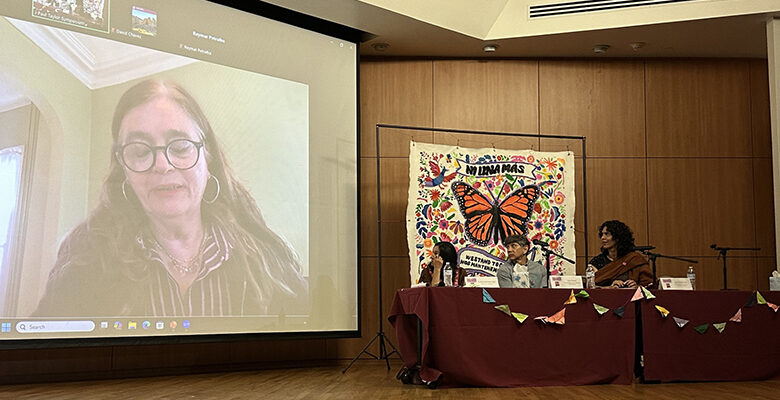
Feature photo: Mercedes Doretti of the Argentine Forensic Anthropology Team addresses the Las Cruces gathering. (Photo by Cynthia Bejarano)
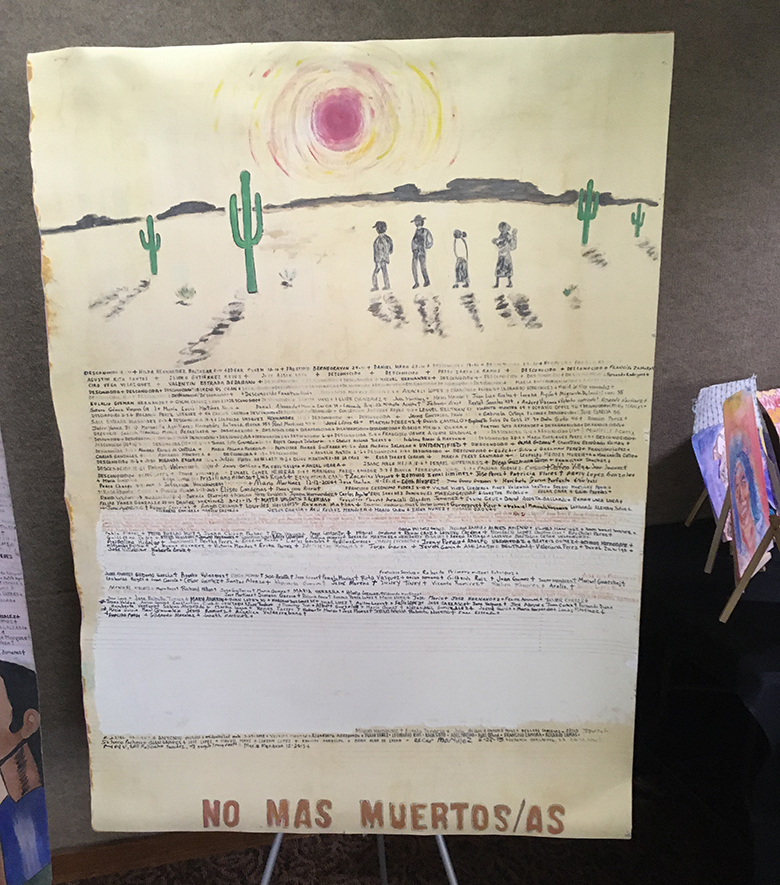
Convened on the 20th anniversary of a similar and memorable event, the 2026 J. Paul Taylor Social Justice Symposium at New Mexico State University tackled the big issue of feminicide, the killing of women based on gender, as well as the multiple dimensions of gender violence and its connections with broader human rights violations and solutions.
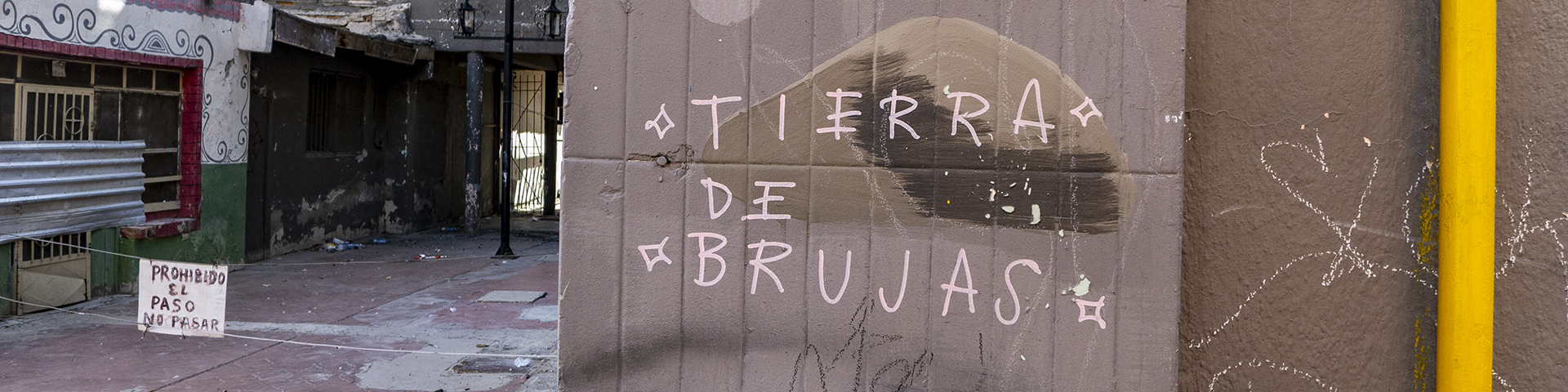
On different panels, the April symposium in Las Cruces featured speakers who were deeply involved in investigating the waves of women’s disappearances and murders of the 1990s and early 2000s that catapulted Ciudad Juárez, Mexico, into the international spotlight and, as if the thousand-decibel alarm bells set off by those atrocities were still not loud enough, presaged the generalized hyperviolence that ravaged the Mexican border city from 2008-2012 and bust loose in other regions of Mexico like a hot geyser scalding the four winds.
Mexican criminologist Oscar Maynez was the lead investigator for the Chihuahua state police in handling the remains of eight young women and girls who were found in a small cotton field in the middle of Juárez in November 2001.
The horrific chronicle of that one episode alone, which became known as the Campo Algodonero case, could fill volumes but suffice it to say that developments evolved into the torture and fabrication of scapegoats, including the suspicious prison death of one detainee; the official misidentification of victims, and violent threats against family members, lawyers and journalists. Two lawyers who represented scapegoats were murdered in broad daylight- Mario Escobedo Jr. by state police in 2002 and Sergio Dante Almaraz in 2006 by an unknown killer(s). Escobedo’s father and brother, both attorneys too, were likewise murdered in Juárez in 2009.
Maynez, who quickly resigned from the investigation, remembered how one supposed cotton field victim (Verónica Martínez) was found dead in a different place in 2002. A quarter century later, the government still hasn’t recognized the Campo Algodonero murders as the work of organized crime, according to Maynez. Instead, the Chihuahua state government has treated the murders as unconnected crimes while pursuing legal cases that lead nowhere and enshrine Campo Algodonero as a mystery.
Due to widespread irregularities and illegalities staining the government’s response to the Campo Algodonero and many other feminicides, family and women’s groups began demanding outside intervention and assistance. Alongside questions of professional incompetence and corruption, punctuated by lingering impunity, a couple of big questions nagged: Who were the unidentified victims piled up in storage after so many years? Did the names of victims assigned to recovered remains and bodies match the real individuals?
Finally, in June 2005, after more than a decade of serial murders and under pressure by the anti-feminicide movement, the State of Chihuahua signed an agreement with the crack Argentine Forensic Anthropology Team (EEAF) to identify victims from Ciudad Juárez and Chihuahua City whose cases were opened between 1993 and 2008.
Zooming in from New York, the EEAF’s Mercedes Doretti, who spent ample time in Juarez and Chihuahua City back in the day, summarized the work of her team. According to Doretti, the EEAF tested the DNA of the remains of 83 women, of which 33 individuals were identified. In the case of the eight Campo Algodonero victims, the EEAF successfully identified seven. One victim remained unidentified.
Besides Verónica Martínez, the EEAF corrected the Chihuahua state government’s misidentification of two purported Campo Algodonero victims as 19-year-old Ciudad Juárez Technological Institute student Guadalupe Luna de la Rosa and 19-year-old Bárbara Araceli Martínez Ramos, both of whom are still officially listed as missing.
The seven victims identified by the EEAF included Claudia Ivette Gonzalez, Laura Berenice Ramos, Esmeralda Herrera Monreal, María de los Ángeles Acosta de Ramirez, Mayra Juliana Reyes, Merlin Elizabeth Rodriguez Saenz, and María Rossina Galicia Meraz. Due to the decomposed nature of the bodies and remains, the exact cause of their deaths was undetermined.
Aged 15 to 20 years old, all the known victims – as well as the three individuals mistakenly named by Chihuahua authorities – vanished in 2000 and 2001. Pressed by fed-up relatives of three of the victims and supported by civil society organizations, the Campo Algodonero case worked its way through the Organization of American States (OAS) human rights system, ultimately netting a historic sentence from the Inter-American Court of Human Rights in December 2009 that ordered the Mexican government to sanction officials for wrongdoing, issue a public apology and hold criminals to account, among other measures. Though compliance with the sentence has been a mixed bag, the judgment set a precedent for other feminicide cases from Mexico based in international human rights law.
In 2025, the Costa Rica-based Inter-American Court ruled in the February 2021 Juárez murder of 17-year-old Lilia Alejandra Garcia.
In a sentence published in Mexico’s El Diario Oficial de la Federación on May 11 of this year, the Inter-American Court noted that Lilia Alejandra suffered gender violence like the Campo Algodonero victims.
The justices ruled that Garcia’s activist mother, Norma Andrade, who fled Juárez after being physically attacked in December 2011 only to suffer another violent assault in Mexico City less than three months later should receive official protection.
Taking into account the social and psychological harm to two young children left behind by Lilia Alejandra, including their forced displacement to Mexico City, the justices determined that three generations of Juárez residents were victimized.
The Inter-American Court ordered the federal Mexican government to publish the sentence, which it did on May 11; indemnify and provide health care treatment to family survivors; protect Norma Andrade; emit public Mea culpas; improve gender violence and disappearance protocols; continue the criminal accountability process; and adopt “measures in favor of protecting” feminicide orphans and the mothers of feminicide victims.
As a signatory to the Inter-American Court, Mexico is obliged to comply with the sentence. The U.S. is not a signatory to the human rights court and does not recognize its rulings.
Upholding Historic Memory and Contemporary Actions
Steeped in generations of social struggles, longtime Mexican activist Alma Gomez offered her seasoned perspectives. The daughter of one of the leaders of the small farmer-based armed revolt against the Mexican government in Chihuahua during 1964-65, Gomez has witnessed and experienced watershed events from inside and outside the system.
Variously, she’s been a political prisoner, an elected legislator, a women’s rights organizer and human rights advocate. She rated the NMSU symposium as a “very important” opportunity for people from two neighboring countries sharing similar problems to meet, exchange information and learn from one another.
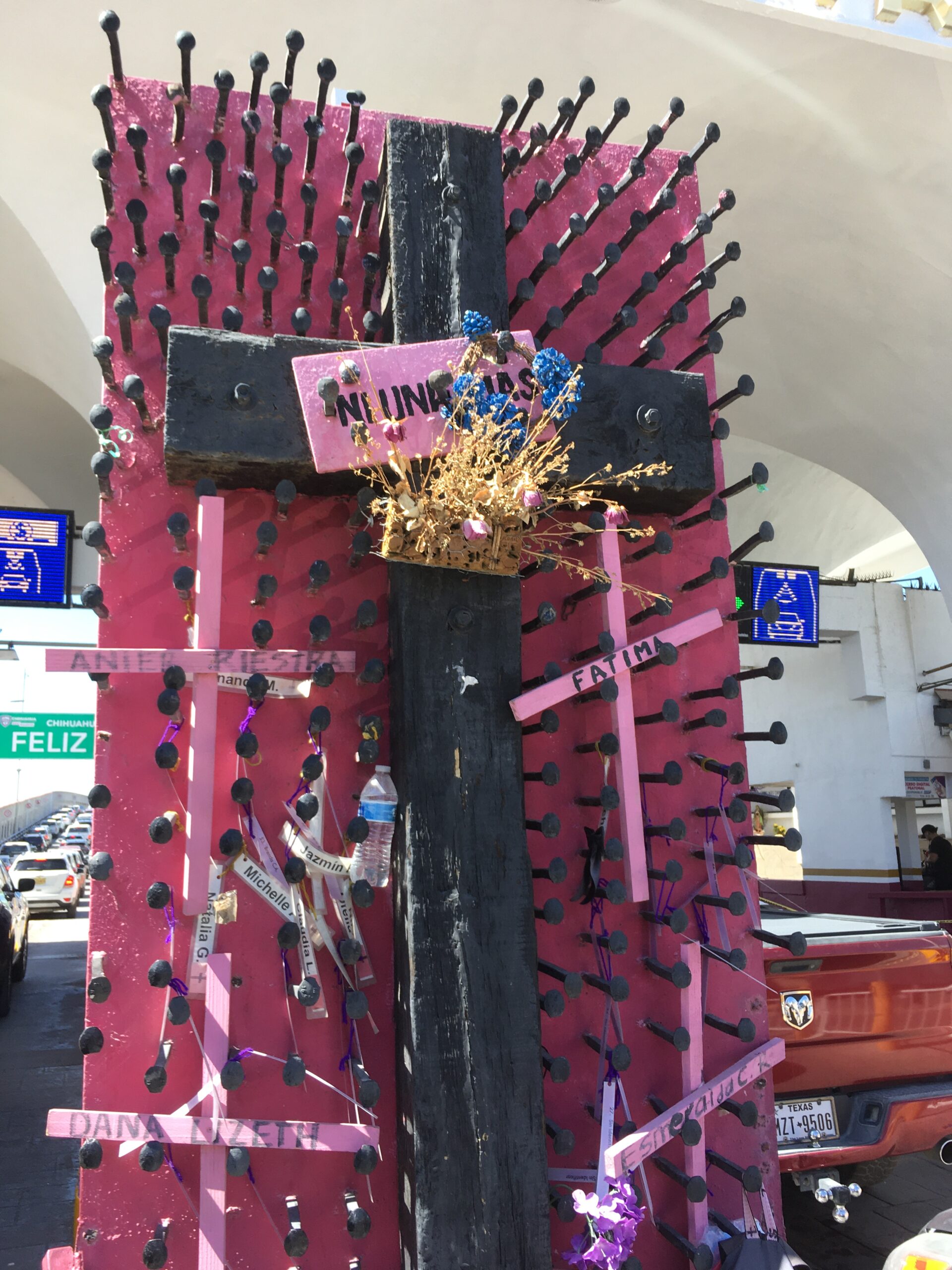
Erected by Mexican activists and forming part of a shared landscape, the feminicide cross monument at the foot of the Mexican side of the Santa Fe Bridge from El Paso to Juárez is an important marker in maintaining the visibility of the feminicide issue, Gomez opined.
“It seems to us that it’s very important that the cross is still there at the Santa Fe Bridge,” Gomez told the reporter. “It’s been there all these years. I know compañeras from the organizations who go there to paint it, give it their little touch and keep it maintained so it stays there. This symbol has been very important there in denouncing what is going on.”
Gomez maintained that the Mexican anti-feminicide movement has produced positive changes, including anti-feminicide and victim laws and victim/family assistance agencies which didn’t exist before, with Chihuahua often leading the way. Ominously, though, further progress is hampered by the frequent turn-over of state government personnel, inadequate budgets and a return of old practices. “If there is no money it means nothing that the law is nice and correct,” Gomez affirmed.
Signaling backsliding, some officials have revived an old and discredited policy of telling complainants that 72 hours must pass before a missing person’s report can be activated, she said.
“We managed to get rid of this. The first moments, the first hours of a disappearance are fundamental for what’s happening, for finding them. But now officials are doing this again. This is a step backwards. There’s no continuity,” the co-founder of the non-governmental Women’s Human Rights Center of Chihuahua City said.
For Alma Gomez, protest alone is insufficient: activists must demand that lawmakers act accordingly while robust, enduring institutions are built and adequately funded.
Gabino Gomez is a veteran of a thousand battles too. In an interview, he traced the morphing of forced disappearance in Mexico from the 1960s, when the federal government directed the detention and disappearance of suspected guerrillas and their supporters as well as unarmed dissidents, to contemporary times when people from all walks of life who suddenly disappear for a plethora of reasons.
(According to the Truth Commission established by former President López Obrador, more than 8,000 people were subjected to extrajudicial executions, arbitrary arrests, torture, forced disappearance and other human rights violations by government agents during the so-called Dirty War. The Commission reported that 1,103 victims were forcibly disappeared between 1965 and 1990.)
Nowadays, the main perpetrators of forced disappearance are criminals sometimes operating with collusion or omission by government actors, according to Gomez. In 2010, when criminal violence hit the entire country hard, the expanding net of disappearances was a “completely ignored problem,” he said.
Gomez credited the National Movement for Peace with Justice and Dignity caravan that traveled from Cuernavaca in central Mexico to Ciudad Juárez in 2011 for raising public awareness and engagement as families spoke out at the different caravan stops about disappearances. In 2012 the caravan crossed borders and journeyed from Los Angeles to Washington, stopping in places such as Albuquerque and El Paso.
Interviewed by the old Frontera NorteSur news service at the Albuquerque stop, two women from Monterrey, Mexico, tearfully told how their daughters, 24-year-old Judith Ceja Aguirre and 26-year-old Coral Perez Triana, vanished together with four other young women in July 2011 while apparently driving in Judith’s truck from Reynosa, Tamaulipas, to Monterrey. All the women except one left behind small children. Coral’s mother, Rosa Elena Perez Triana, wound up caring for her daughter’s two young children, a 9-year-old girl and a 20-month-old boy, testing the grandmother’s physical and psychological health. “It’s like they take a piece of you,” Perez said. In 2026, a website of the Tamaulipas offers a one million peso award for information on Coral Perez and other disappeared persons.
Gomez remembered speaking in El Paso during the 2012 caravan. “I spoke and said there were possibly 10,000 disappeared people (in Mexico). Now, 14 years after those demonstrations, we’re talking about more than 130,000 people,” he said.
Gomez acknowledged positive steps like the passage of the national victims’ law and creation of relevant public agencies and commissions, but the Chihuahua activist cautioned that the State is overwhelmed and lacks economic infrastructure. He criticized as “regrettable” federal officials initial, negative reaction to a recent critical report by the UN Committee on Enforced Disappearances: “The federal government should have accepted reality because to deny it is to not recognize a problem and address it.”
Forced displacement of individuals, families and communities constitutes a related human rights crisis arising from criminal activities, Gomez said, characterizing it as “an invisible problem” due in part to the geographic isolation of rural communities where criminal groups battle for control of access, land and resources. In Chihuahua state, hard hit areas in recent years include the rural Juárez and Sierra Tarahumara, including indigenous communities.
Crises and Responses Cross Borders
In May 2026, the Mexican media was replete with stories about forced disappearance and forced displacement. On Mother’s Day weekend, mothers of disappeared women and men protested in Juárez Juarez, Mexico City and other cities while relatives of missing migrants from other nations unsuccessfully scoured Chiapas state for family members. New instances of displacement occurred in Chihuahua where 100 people reportedly fleeing from violence in neighboring Durango state were attacked by gunfire. In Guerrero state, hundreds fled indigenous communities near Chilapa after a criminal band attacked with drones and explosives.
A new report together with 40 recommendations from the Inter-American Commission on Human Rights reiterated the crisis of the disappeared, while a separate one from Mexico City’s Iberoamerican University cast fresh light on the crisis of the displaced. According to university researchers, nearly 16,000 people suffered forced displacement in Mexico during 2025. Chihuahua, Michoacan and Guerrero were the top three states experiencing community displacement, according to researchers.
Reflecting on the 2026 NMSU symposium and the issues connected to it, NMSU scholar and symposium co-organizer Dr. Cynthia Bejarano mulled the shortcomings, gaps and misunderstandings related to gender violence that persist well into 21st century.
“I’m always humbled and shocked how little people know about this,” Bejarano said in a post-symposium interview. Although the legal concept of feminicide and measures to prevent it are gaining certain ground in Mexico, Latin America and Europe, the U.S. lags sorely behind, according to Bejarano. Though violence against women affects everyone and produces “ripple effects everywhere,” feminicide is still a largely taboo subject in this country, she said.
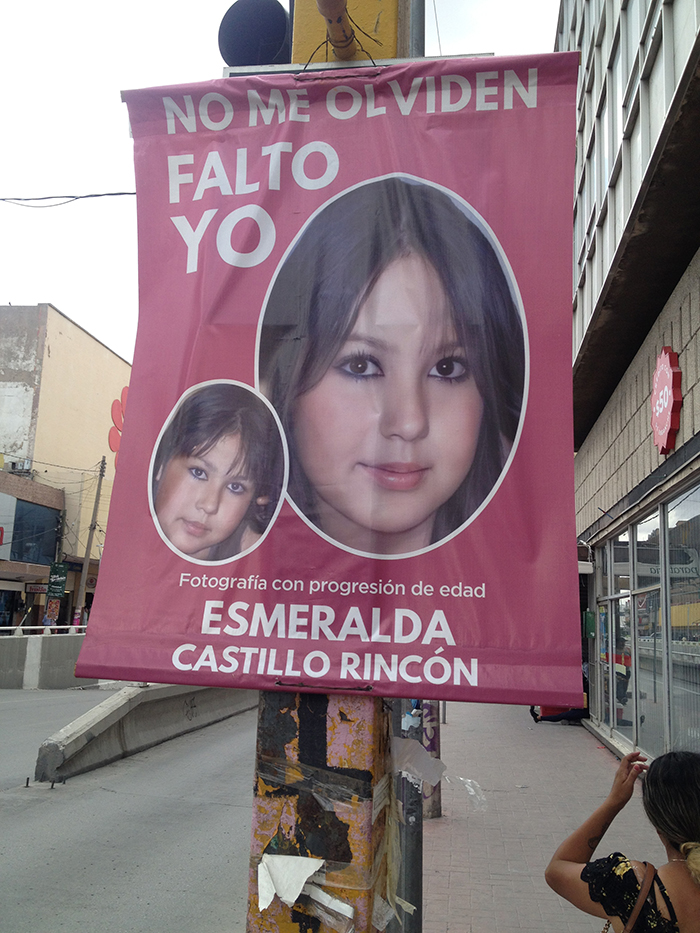
As a fronteriza or borderlander, Bejarano has come across stories and images that could have been from either side of the line. Recently, she saw a flyer for a missing girl in Las Cruces’ Mesilla Valley Mall that reminded her of ones she had seen in Juárez and Chihuahua.
Indeed, gender violence is as much a U.S. story as well as a Mexican one, exemplified by the unfolding sagas of the Missing and Murdered Indigenous Women movement, the Epstein files and much more.
Speaking at the Las Cruces symposium, Mexican lawyer Andrea Medina, plaintiff’s co-lead attorney in the Campo Algodonero Inter-American Court case, sketched out a far-flung global system of oppression connected to slavery, sexual exploitation, official cover-ups, and the Epstein-connected Zorro ranch in New Mexico, to name a few.
Moving forward, Bejarano urges society to embrace historical memory and stay keenly focused on eradicating gender and other forms of violence- huge efforts that will involve everybody.
Only a short drive away in Ciudad Juárez, Martin Chávez is one who hasn’t forgotten or thrown up his hands. He was only eight years old when his big sister, 15-year-old Maria Elena Chávez Cabrera, vanished at the turn of the century. Chavez’s memory of his sister is from photos or from the words of his mother.
The disappearance and subsequent discovery of Maria Elena’s remains created great tension and sadness, triggering familial disintegration. “Thanks to God, we’re all united now. Everything is fine now, but that situation was difficult,” Chávez said.
Since he didn’t really know his sister, life might have been easier to just forget her and move on. Chávez, however, chose a different path. “But my mom always remembers her. (Maria Elena) is always in her memories, her thoughts, and that’s how I remember her too. Though I didn’t know her, I feel it and believe (Maria Elena) deserves justice and recognition. She was a young girl and didn’t ask for what they did to her.”