
by Oscar J. Martínez
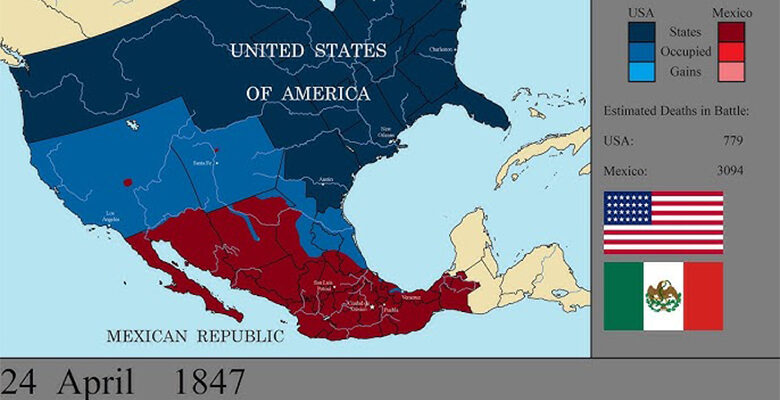
The year 2026 (on February 2) marks the 178th anniversary of the signing of one of the most important treaties in US and Mexico’s history – the Treaty of Guadalupe Hidalgo. This agreement ended the 1846-1848 US war of conquest against Mexico.
Fundamentally, the war was caused by US territorial expansionism. For years the US coveted areas of Mexico’s northern frontier and attempted to buy them, but Mexico would not sell. Tensions mounted in 1845 when the US imperiously annexed the Republic of Texas, a province ruled by Mexico but illegally overrun by Anglo-American migrants. Anxious to acquire additional Mexican land, in 1846 Washington concocted an armed confrontation along the Rio Grande that led to rupture in the diplomatic relations between the two countries. A military skirmish followed, and finally war.
In 1846 Mexico had been an independent republic for only 25 years. Severely unfavorable conditions undermined the effort to unify the young republic. The Mexican people faced chronic internal political instability, social fragmentation, and a shattered economy, all of which made nation-building exceedingly difficult.
Most of the 8 million people then residing in Mexico lived outside the fledgling governmental system. The opposite was true in the US, which had a population of about 20 million and enjoyed great economic advantages.
The crushing weaknesses of Mexico at the time and the vast strengths of the US made the outcome of the war easily predictable. Much better equipped and trained US soldiers quickly invaded Mexico and gained the upper hand in the negotiations for territory.
Some US expansionists pressed for the absorption of all of Mexico, but eventually Washington settled for “only” half of Mexico, including the takeover of California, Nevada, and Utah, most of New Mexico and Arizona, and portions of Wyoming, Colorado, and Oklahoma. Mexico received $18 million dollars in compensation
(about $750 million today) for those lands (except Texas). Then in 1853 the US purchased parts of Sonora and Chihuahua for $10 million dollars (about $421 million today) as part of the Gadsden Treaty; those additions enlarged Arizona and New Mexico.
Mexico feared greater losses both because of US direct military occupation in the 1840s and threats of further aggression in the 1850s. Understandably, Mexico reluctantly ceded its most valuable territories to the US between 1845 and 1853.
With the vast fertile lands, minerals, precious metals, superb ports, and other riches taken from Mexico, the US assured itself a future of economic and military prominence on the global stage. Conversely, having lost such valuable natural assets, Mexico could only look forward to diminished wealth, a scarcity of agricultural land, reduced potential for conducting world trade, and limited economic growth.
The alteration of the US-Mexico boundary in 1848 and 1853 truly helped shape the destiny of each nation. As the saying goes, the US “made out like a bandit”—and Mexico paid the price.
With the various alterations of the border, the approximately 100,000 Mexicans and thousands of indigenous people who lived in the territories detached from Mexico were subjected to pronounced racism and economic exploitation by US corporations and land-hungry Anglo-American migrants. The white settler largely ignored the cultural, religious, and economic rights guaranteed by the Treaty of Guadalupe Hidalgo to the annexed populations, essentially transforming them into “foreigners in their native land.”
Ref—Oscar J. Martínez: Mexico’s Uneven Development (2016); Stunted Dreams (2017); Troublesome Border (2006).
Oscar J. Martínez is an Emeritus Professor of History, University of Arizona