
by Kent Paterson
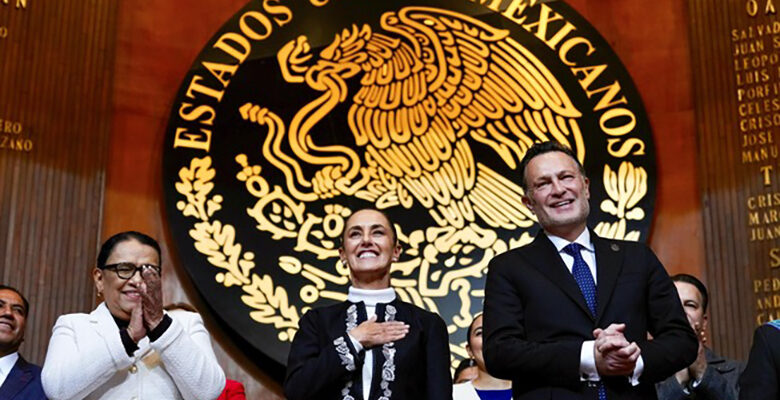
In case you haven’t noticed, political power in Mexico is increasingly in the hands of women. That reality was proudly stated by Mexican Congresswoman Kenia López Rabadán at a ceremony held in the central Mexican city of Querétaro on February 5, the 109th anniversary of the Mexican Constitution.
The president of Mexico’s Chamber of Deputies, López noted the historic presence at the Querétaro celebration of three women who now have top legislative and executive political posts, including President Claudia Sheinbaum, Senate President Laura Iztel Castillo and herself.
The leadership of women in Mexican politics doesn’t end with President Sheinbaum and Congressional leaders. Half the members of Sheinbaum’s cabinet are women, including Rosa Icela Rodríguez, who holds the traditionally powerful Interior Ministry post.
Of the nine Supreme Court ministers, five are women. Unlike in the United States, Supreme Court justices are elected by popular vote for 12-year terms. Enacted last year, the reform was highly polemical but a majority of voters who turned out decided that lifetime political appointees deciding how people should live wasn’t a good idea.
Less represented in the hierarchies of state and municipal political power, women still have achieved a historic and influential presence outside of the federal government. Of 32 state governorships, for instance, 13 are currently possessed by women. In 2026 women govern the powerhouse industrial states of Baja California, Chihuahua, Aguascalientes, Guanajuato and Mexico state as well as the economic, political and bureaucratic nerve center of Mexico City. Current governors include women from both the Morena ruling party and opposition.
In a nation historically known for its machismo and high levels of violence against women, more than a few Mexicans point to the contradiction between the growing political power of women and ongoing gender violence.
But social and political changes never develop along an even keel and are prone to gains and setbacks, fade outs and comebacks. The U.S. is a glaring case in point.
Nonetheless, in Mexico at least, the oft-stated remark by President Sheinbaum that Mexico is experiencing “The Time of Women” captures a historic epoch in which women are defining the present and future political course of a nation.